
New Zealand’s cities are changing quickly. Higher density housing, planning reform and changing household needs are reshaping the way many suburbs look and function. But as that happens, we need to keep asking a simple question, are we creating places that people actually want to live in?
LJ Hooker Head of Research Mathew Tiller said liveability should not be judged by housing numbers alone.
“A liveable city is not just about squeezing more homes into a suburb. It is about whether people can move around easily, enjoy where they live, access the services they need and feel safe and comfortable in their neighbourhood,” Tiller said.
New Zealand’s housing shortage and affordability pressures also need to remain front of mind. The country’s largest cities need more homes, and that will require greater density in the right locations. The challenge is not whether we build more, it is whether we do it in a way that also protects liveability. More housing and better urban design should not be seen as competing goals, they need to work together.
What makes a city liveable?
Liveable cities are places where people can:
- Move around safely and easily
- Access work, education and essential services
- Enjoy outdoor space and a sense of community
- Balance convenience with quality of life
Liveability comes down to how a place works for people in everyday life.
“It is about the day-to-day experience of living in a suburb. Can parents walk safely with their children? Do streets feel open and functional rather than congested? Do people have enough space to relax and enjoy where they live?” Tiller said.
Urban design plays a big role in delivering these outcomes, particularly when it comes to green space, transport access and practical neighbourhood design.
The value of gardens and green space
LJ Hooker research released last year revealed a clear consumer preference: two-thirds of New Zealanders would not consider buying a home without a lawn or garden.
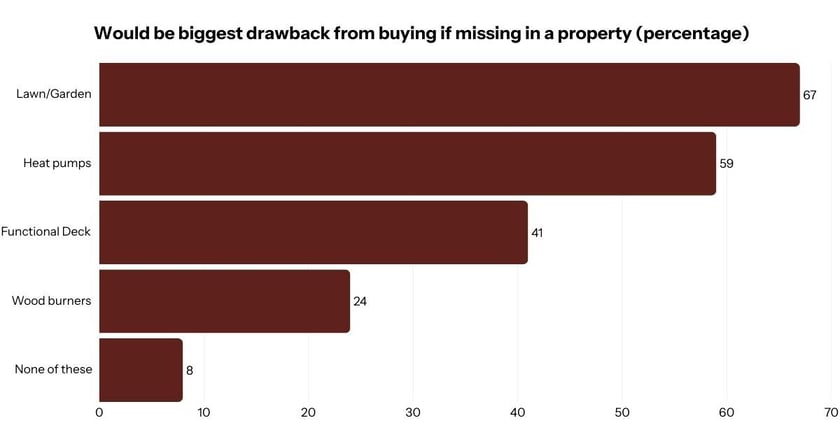
This finding underscores how important private outdoor space remains to households.
“The desire for a garden has not disappeared. Even as cities grow upward and inward, most New Zealanders still value having their own piece of outdoor space, whether that is for children, pets, entertaining or simply wellbeing,” Tiller said.

Beyond lifestyle, green space delivers measurable benefits:
- Urban cooling and heat mitigation
- Stormwater absorption
- Improved mental wellbeing
- Biodiversity support
Private gardens have historically made up a substantial share of urban green coverage. As sections shrink and site coverage increases, that contribution declines.
“When we remove private green space without adequately replacing it, we are not just changing aesthetics, we are changing environmental resilience and the day-to-day experience of living in that area,” Tiller said.
“If we continue to build apartment blocks and dense housing, developers need to consider the importance Kiwis place on outdoor space. Shared outdoor areas and usable communal space should be part of developments to appeal to buyers who see a missing garden as a deal breaker,” Tiller said.
The car ownership reality
At the same time, urban planning decisions are increasingly moving away from minimum parking requirements.
However, 2023 Census data highlights a critical disconnect between planning theory and lived reality:
- 93% of New Zealand households have at least one vehicle
- 60% have two or more vehicles
Distribution of motor vehicles per household – New Zealand, 2023 Census
|
% of households |
|
|
No motor vehicle |
6.3% |
|
One motor vehicle |
33.5% |
|
Two motor vehicles |
39.2% |
|
Three motor vehicles |
13.2% |
|
Four motor vehicles |
5.1% |
|
Five or more motor vehicles |
2.8% |
Despite this, many new medium-density developments provide one or even no off-street car parks per dwelling.
“There’s a significant mismatch between household behaviour and development design,” Tiller said.
“We continue to approve homes without sufficient off-street parking, even though most households own multiple vehicles.”
Off-street parking, rules have changed, but practicality still matters
In 2022, under the National Policy Statement on Urban Development, councils were required to remove minimum car parking requirements from district plans in most urban areas. This means developers are generally no longer mandated to provide a set number of off-street parks per dwelling, except for accessible parking.
Although councils cannot require minimum numbers of parks, design standards still apply when parking is provided. The typical minimum residential parking bay dimensions are approximately 2.4 metres wide by 5 to 5.4 metres long. These standards reflect baseline functionality, not generous sizing.
“The removal of minimum parking numbers does not remove the need for functional design,” Tiller said. “If a space is too small for modern vehicles, it will not be used as intended and the pressure simply shifts back onto the street,” Tiller said.
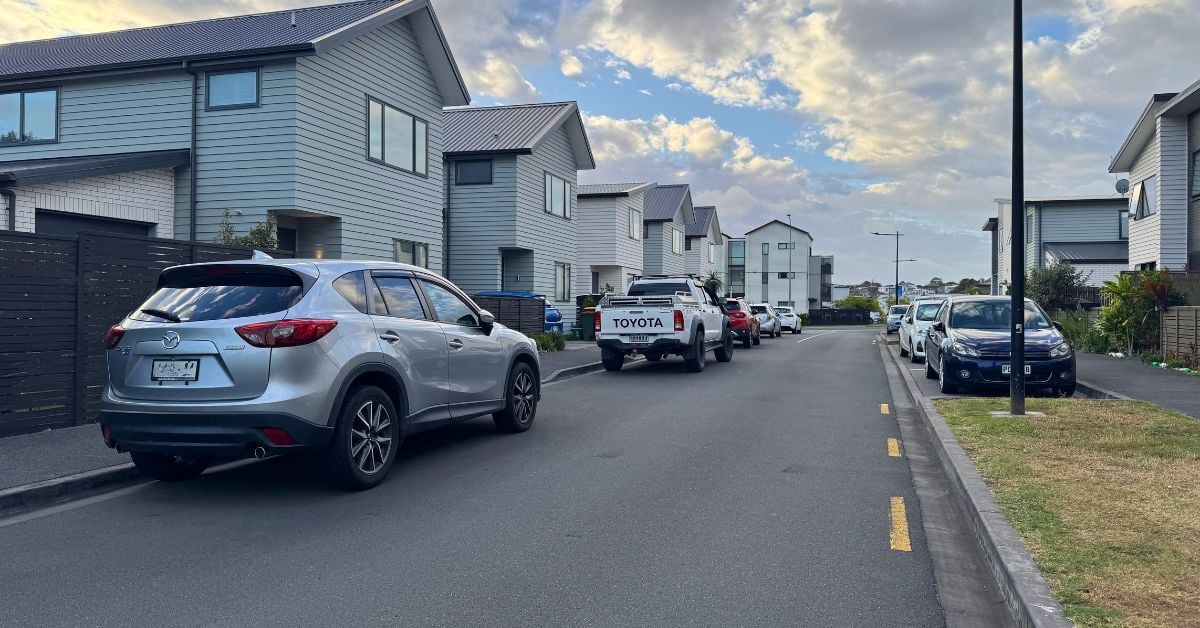
As vehicle dimensions increase, particularly with the growing prevalence of SUVs and double cab utes, minimum compliant garages can become impractical. In some cases, residents choose to use garages for storage and park on the street instead, undermining the purpose of providing off street parking in the first place.
“Liveability is not improved by nominal compliance. If we want streets that are safe, navigable and efficient, parking, where it is provided, needs to reflect real world vehicle sizes and household behaviour,” Tiller said.
The street congestion effect
When developments lack adequate onsite parking, vehicles shift to the street. This creates a cascading impact:
- Reduced road width and slower traffic flow
- Increased congestion in suburban streets
- Compromised visibility for drivers and pedestrians
- Greater safety risks for cyclists and children
- Strain on neighbourhood amenity
- Delays to waste collection, delivery services and emergency access
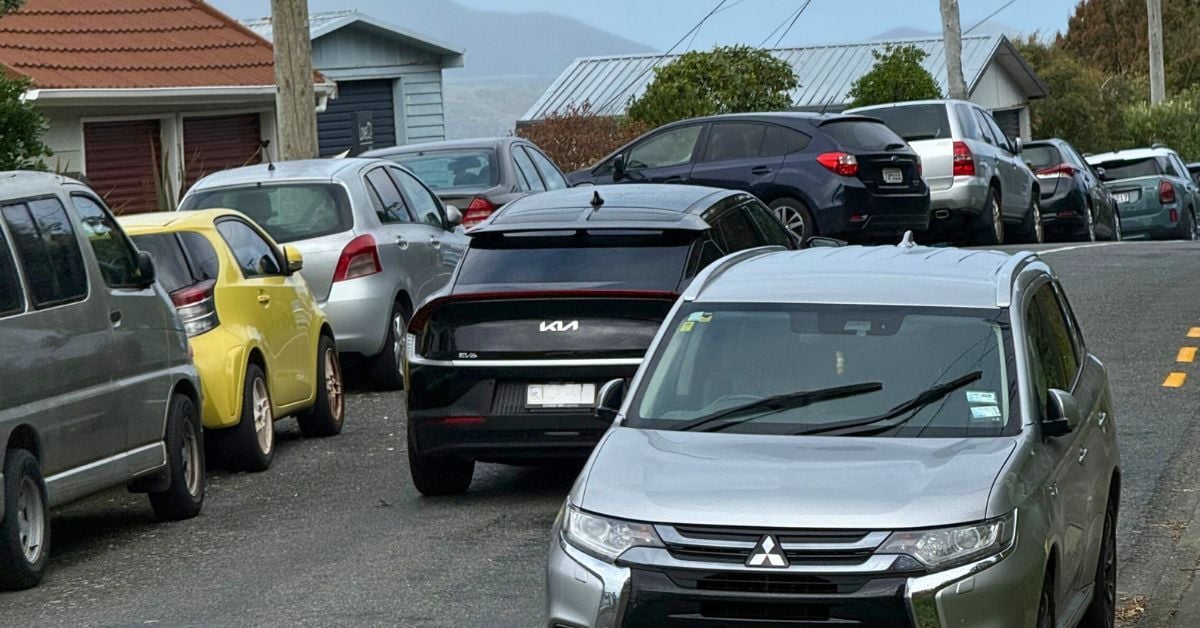
“When cars spill onto streets in high density areas, roads effectively become storage zones. That was not their original purpose. Streets are meant to move people safely, not store vehicles,” Tiller said.
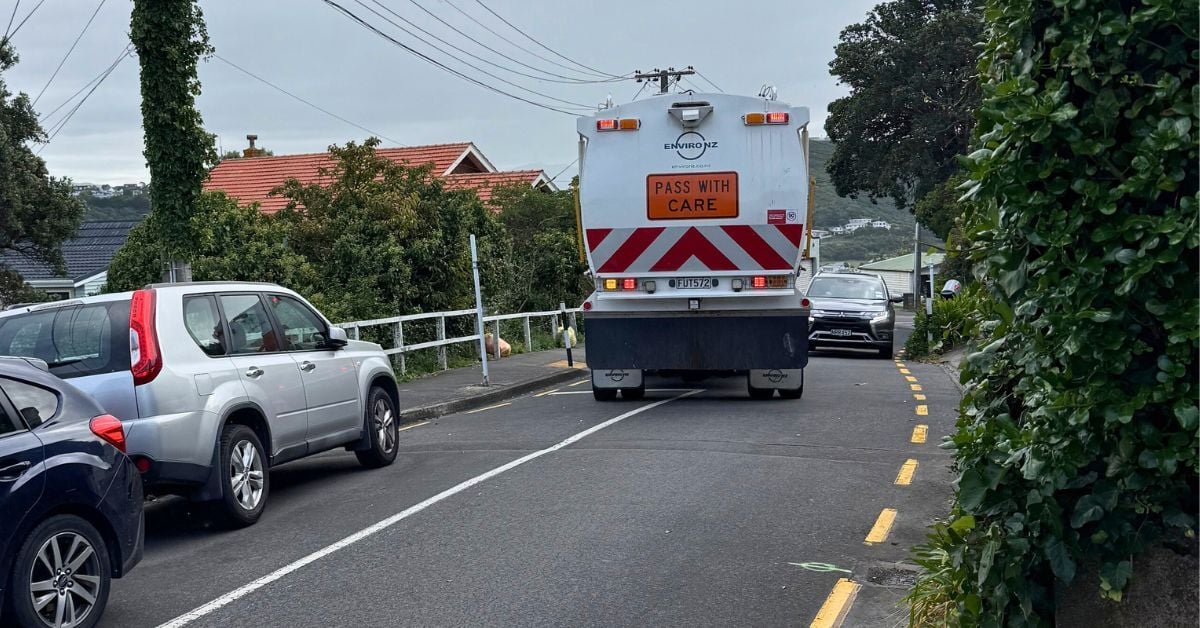
Residents in many intensifying suburbs already face difficulty navigating narrow roads lined continuously with parked cars.
“It is not just an inconvenience, it affects emergency access, waste collection, delivery services and everyday safety. In some situations, heavy street parking can make it harder for larger vehicles, including fire trucks and ambulances, to move through local roads,” Tiller said.
Density without infrastructure
Urban intensification can deliver clear benefits, especially in areas close to high frequency public transport and essential services. It can improve housing supply, support affordability over time and make better use of existing urban land.
However, Tiller said the success of density depends on where it occurs and whether infrastructure keeps pace.
“There is a strong case for less parking in areas within easy walking distance of major transport hubs, train stations, bus interchanges and rapid transit corridors,” Tiller said.
“But outside those locations, it is unrealistic to assume households will suddenly stop owning cars,” Tiller said.
A one size fits all approach still risks creating neighbourhoods that feel more congested and less functional if transport, open space and local services do not keep up.
While reducing car reliance may be a long-term goal for many cities, Tiller said infrastructure needs to come first.
“We cannot plan for a future transport system that does not yet exist at scale. Planning needs to reflect how people live today, while gradually supporting change over time rather than forcing it too early,” Tiller said.
Over time, New Zealand’s cities should become less dependent on private vehicles, particularly in well-connected urban areas. Better public transport, safer walking links and stronger local amenity should gradually reduce the need for households to rely on multiple cars. But that transition will take time, and planning decisions made today still need to reflect how most households currently live and move around.
The principle of choice
Tiller said liveability is ultimately about giving people options, not removing them.
“People want flexibility. They want access to public transport where it works, but they also want secure off-street parking if they own a vehicle. They want density where it makes sense, but not at the expense of safety, convenience or green space,” Tiller said.
He said practicality remains a major factor in buyer decision making, particularly for families.
“If developments do not reflect what buyers actually want and need, there is a risk of long-term dissatisfaction and weaker neighbourhood appeal,” Tiller said.
Electric vehicles and the growing role of off-street parking
As electric vehicle uptake grows in New Zealand, the role of off-street parking is becoming even more important to everyday liveability. Unlike traditional vehicles, EVs depend on regular and convenient access to charging, and for most households that is most practical at home.
“The shift to electric vehicles does not reduce the need for parking, it changes its role. A car space is no longer just somewhere to leave the car, it becomes part of how a household powers its day-to-day transport,” Tiller said.
For many households, particularly in suburban areas, at home charging is likely to be the simplest and most cost effective option. Without access to a dedicated off-street space, residents may be forced to rely on public charging networks or impractical workarounds, such as charging from a home to a car parked on the street.
“If you do not have a reliable place to charge, owning an electric vehicle becomes much less practical,” Tiller said.
This creates a real challenge for some higher density or more affordable housing developments where off-street parking is limited or absent. If housing design does not account for charging access, there is a risk some households are effectively locked out of the shift to lower emissions transport.
“As EV use grows, demand for homes with charging ready parking is likely to increase. If we want housing to support the transport transition, we need to make sure off street parking is not just provided, but genuinely usable,” Tiller said.
A practical path forward
To improve liveability outcomes across New Zealand’s growing cities, Tiller said planning needs to strike a better balance between housing supply, infrastructure and the way people live day to day.
1. A more targeted approach to off street parking
“Rather than applying a broad minimum across all developments, parking requirements should respond to location, dwelling type and access to transport,” Tiller said.
“In genuine transport oriented precincts, lower parking provision may be appropriate. But in more suburban locations, where public transport remains limited and car ownership is still high, developments should include enough off-street parking to reflect real household needs and avoid simply shifting the problem onto local streets,” Tiller said.
2. Protect and prioritise green space
Planning frameworks should continue to make room for private gardens and usable outdoor areas, alongside investment in quality public parks.
“Green space is not just cosmetic, it is part of the infrastructure of a liveable city. It supports wellbeing, helps cool urban areas and adds to the long-term appeal of a neighbourhood,” Tiller said.
3. Align transport investment with density
Intensification should happen alongside transport upgrades, not ahead of them.
“If we genuinely want fewer cars, the alternative needs to be viable, reliable and convenient,” Tiller said.
“Until then, development needs to reflect how people actually move around,” Tiller said.
The bigger picture
New Zealand’s growing population and ongoing housing demand mean cities need smarter urban solutions, and that includes building more homes across a wider range of types and price points. But success should not be measured by housing numbers alone.
“A city can meet its housing targets, but if it compromises on safety, functionality and everyday liveability, it has not truly succeeded,” Tiller said.
He said the best outcomes come from balance, density where it makes sense, green space where it is valued, and infrastructure that reflects real world behaviour.
“We need cities where people can move around easily and enjoy where they live. That means designing neighbourhoods that work in practice, not just on paper,” Tiller said.
Share
.jpg)